GoldQualityVerificationandAssayMethods
Quick Section Jump (24 Topics)↓
Understanding how gold quality is verified through different assay methods, testing procedures, and quality standards in mineral trading.
Gold Quality Verification and Assay Methods
Verifying the quality and purity of gold is fundamental to mineral trading. Different assay methods provide varying levels of accuracy, and understanding these methods helps buyers and sellers ensure fair transactions and regulatory compliance.
Purity Standards
Karat System
The karat system measures gold purity in 24 parts:
- 24K = 99.9% pure (fine gold)
- 22K = 91.7% pure
- 22K = 91.7% pure
- 18K = 75% pure
- 14K = 58.3% pure
Fineness
Fineness expresses purity as parts per thousand:
- 999 = 99.9% pure
- 916 = 91.6% pure (22K)
- 750 = 75% pure (18K)
International bullion typically uses the fineness system, with 999.9 being the highest standard for investment-grade gold.
Assay Methods
Fire Assay
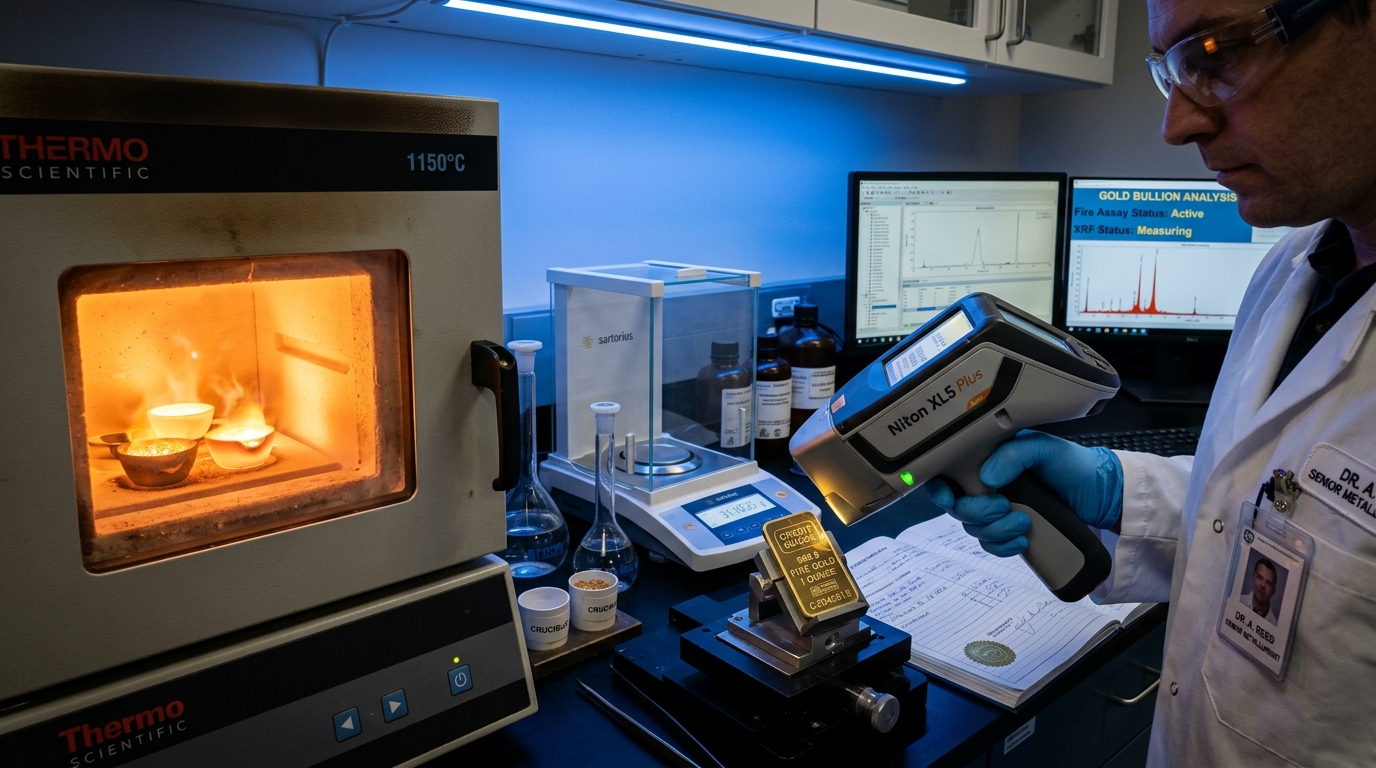
Fire assay is considered the most accurate method for gold determination and is the industry standard for high-value transactions. The process involves:
- Sample preparation and weighing
- Fusion with fluxing agents
- Cupellation to separate precious metals
- Parting to separate gold from other precious metals
- Precise measurement of gold content
Fire assay can detect gold to parts per billion accuracy and is used for final settlement in most significant transactions.
X-Ray Fluorescence (XRF)
XRF is a non-destructive testing method that uses X-rays to determine the composition of a sample. Advantages include:
- Non-destructive testing
- Rapid results
- Portable equipment available
- Can test multiple elements simultaneously
Limitations include surface-only testing and potential interference from surface treatments or impurities.
Acid Testing
Acid testing is a traditional method using nitric acid of varying strengths to estimate gold purity. While simple and inexpensive, it:
- Provides only approximate results
- Is destructive to the sample
- Requires operator skill
- Has limited accuracy
Acid testing is typically used for preliminary screening rather than final valuation.
Electronic Testing
Electronic gold testers use electrical conductivity to estimate purity. These devices:
- Provide quick results
- Are non-destructive
- Are portable and relatively inexpensive
- Have moderate accuracy
Electronic testers are useful for preliminary assessment but are typically not used for final settlement in significant transactions.
Laboratory Standards
Accredited Laboratories
For significant transactions, testing should be conducted at laboratories accredited by relevant authorities. In Uganda, government-approved laboratories include facilities recognized by the Directorate of Geological Survey and Mines.
Sample Preparation
Proper sample preparation is critical for accurate results:
- Representative sampling
- Proper homogenization
- Clean equipment to prevent contamination
- Documented chain of custody
Quality Assurance
Reputable laboratories implement quality assurance including:
- Duplicate testing
- Standard reference materials
- Calibration procedures
- Proficiency testing
Documentation
Assay Certificates
A proper assay certificate should include:
- Laboratory identification and accreditation
- Sample identification and chain of custody
- Testing methods used
- Results for gold and other elements
- Uncertainty estimates
- Signature and date
Verification
Assay certificates from reputable laboratories can often be verified directly with the issuing laboratory, providing additional assurance of authenticity.
Practical Considerations
Sampling Risk
Because only a small portion of a consignment is tested, proper sampling is critical. Poor sampling can lead to unrepresentative results regardless of assay accuracy.
Heterogeneity
Gold deposits and processed gold can be heterogeneous, meaning different portions may have different compositions. This makes representative sampling particularly important.
Impurities
Gold often contains other metals including silver, copper, and other elements. A complete assay should report these impurities as they affect both value and refining requirements.
Trading Standards
LBMA Standards
The London Bullion Market Association sets standards for "Good Delivery" gold bars, which include:
- Minimum purity of 99.5%
- Specific weight ranges
- Approved assayer marks
- Serial numbers
Regional Standards
Different regions may have specific standards for gold purity and documentation. Understanding both international and local standards is important for cross-border trade.
Best Practices
For reliable quality verification:
1. Use accredited laboratories for significant transactions
2. Ensure proper sampling procedures
3. Maintain chain of custody documentation
4. Verify assay certificates when possible
5. Understand the limitations of different testing methods
6. Use appropriate methods for the transaction value and context
Quality verification is not just about getting a number—it's about having confidence in the accuracy and reliability of that number for commercial decision-making.
Need Advice on Mineral Compliance & Export?
Our advisory team helps international buyers and mining operators with regulatory navigation and verification.